Gardening Services in Pimlico

Our gardening services in Pimlico cover practical, well-planned outdoor care for homes, managed properties and shared spaces that need regular attention. We focus on the everyday work that keeps a garden tidy, healthy and usable, from lawn care and hedge trimming to seasonal maintenance and fuller clear-downs where growth has become difficult to manage. The aim is straightforward: dependable garden work that supports a neat finish and makes ongoing upkeep easier.
We can help with routine visits as well as one-off jobs, depending on what the space needs. That might include cutting back overgrowth, keeping borders in shape, improving the appearance of lawns, or handling a more involved tidy-up after a period of neglect. Good garden care is not just about appearance; it is also about keeping plants, surfaces and edges under control so the whole space remains manageable.
For a quick start, you can review the main service pages, then choose the work that best matches the condition of the garden. If you already know what needs attention, a short outline of the area, access and the type of maintenance required is usually enough to begin a quotation request.
Routine garden maintenance

Regular maintenance is the foundation of most gardens that stay presentable throughout the year. Our garden maintenance service is suited to spaces that need recurring care rather than occasional rescue work. It can include general tidying, border upkeep, cutting back soft growth, keeping paths and edges clear, and maintaining a balanced look across the garden. That kind of care is useful where planting is established but still needs hands-on attention to stay orderly.
Maintenance work is often most effective when it follows the natural rhythm of the garden rather than trying to force every area into the same schedule. Lawns, shrubs and beds each respond differently, so the right plan may involve lighter frequent visits or a more detailed seasonal visit. Where the site has mixed planting, hard surfaces and narrow access, the work is usually best approached in sections so each part is properly finished rather than rushed.
What a maintenance visit may cover
Typical tasks can include the following: grass cutting, light weeding, edging, trimming back soft growth, leaf clearance, deadheading where suitable, and a general tidy of visible areas. Depending on the garden, our approach can also include basic checks on overhanging growth, removal of waste from the work, and sensible decisions about what should be cut now versus what should be left for better seasonal timing.
Lawn care and trimming
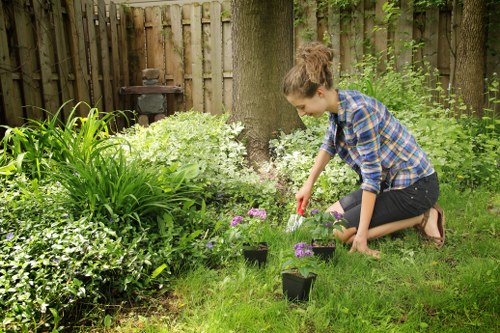
A tidy lawn can change the feel of a whole outdoor space, especially where the garden is small or shared. Our lawn mowing work is aimed at keeping grass at an even, manageable length and improving the overall appearance of the area. Attention to edges, access points and awkward corners matters just as much as the central cut, because uneven margins can make the entire lawn look unfinished even when the main surface is neat.
Lawns often need different treatment depending on how they are used and how quickly they grow. A front garden lawn may need clean, frequent shaping, while a sheltered rear space may build up thicker growth and benefit from a more careful cut. We also consider obstacles, slopes, ornamented borders and narrow passages so the mowing work is carried out neatly rather than simply quickly. If grass is long or patchy, the best result usually comes from a measured approach that avoids unnecessary stress on the lawn surface.
Alongside mowing, trimming the surrounding growth helps keep the entire area coherent. We can edge around beds and hard landscaping, tidy around fences and walls, and make the cut feel intentional rather than approximate. For many properties, this is one of the most visible parts of garden care and it is often the first step that makes the rest of the space feel under control again.
Hedges, shrubs and shaped growth
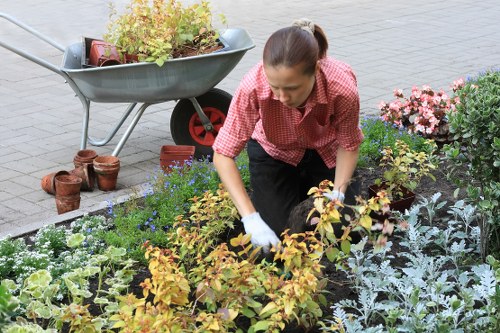
Hedge and shrub work is about balance as much as reduction. Our hedge trimming service is designed to keep planted boundaries tidy, encourage a controlled shape and reduce the sense of the garden becoming overgrown at the edges. A well-trimmed hedge can define a space cleanly, improve light where needed and create a more organised outline without removing the character of the planting.
Different hedges call for different handling, and the timing of the trim can matter. Some plants respond well to light shaping, while others benefit from more selective cutting to preserve health and density. The same is true of shrubs, which may need thinning, tidying or careful reduction rather than broad clipping. Where branches extend over paths or obscure sightlines, the work also has a practical benefit, helping the garden remain safer and easier to use.
We aim to leave the shape consistent and the finish smart, with waste removed as part of the job where possible. If you want the outside to look kept rather than just cut back, trimming work is often the point where the wider garden starts to feel properly maintained.
Clearance and heavier cut-back work

Some gardens need more than routine maintenance. Our garden clearance service is for areas that have become congested with long grass, excess growth, fallen material or general clutter that prevents the space from being used comfortably. Clearance work is usually about restoring a workable starting point, after which lighter maintenance becomes much easier to keep up.
Projects of this kind can involve tackling tangled beds, reducing bulky growth, lifting debris and creating clear access to the main parts of the garden. When the work is more involved, it helps to decide what should be retained, what can be cut back and what is ready for removal. That keeps the job focused and avoids disturbing healthy planting that still has value. If there are different areas in different states, the work can be staged so the most difficult sections are handled first.
Clearance is also useful before replanting, landscaping changes or a return to regular upkeep. The aim is not only to make the site look better for the day, but to leave it ready for the next decision, whether that is a simple tidy regime or a more ambitious outdoor project.
Landscaping and improvements
Landscaping is the natural next step when a garden needs more than routine care and a better layout would make the space easier to live with. Our landscaping work can support practical changes such as refreshed surfaces, better definition between planted and open areas, improved use of corners, or a more cohesive finish across the whole garden. The focus is on sensible outdoor improvements rather than unnecessary complication.
Good landscaping starts with the existing space. A compact garden may benefit from clear routes, simple structure and well-chosen finishes, while a larger one may need better transitions between open ground, planting and seating zones. Materials, levels, boundaries and maintenance requirements all influence the right solution. Even modest changes can make a garden easier to care for if they reduce awkward edges, muddy patches or cluttered sections that repeatedly cause problems.
Where planting and structure need to work together, it helps to think about the garden as a whole rather than as separate features. A well-finished area should feel intentional, balanced and manageable. If you are considering a broader change, this is often where it makes sense to begin before committing to specific finishing details.
Outdoor structure and decking
Some properties need a firmer outdoor framework to make the garden more usable. Our decking services can support that aim by introducing a defined surface for stepping, sitting or linking different parts of the garden. Decking can be useful where the ground is uneven, where a cleaner platform is preferred, or where a section of the outdoor area would benefit from a more finished feel than bare soil or patchy ground can provide.
The most suitable decking arrangement depends on how the space is used and what surrounds it. Design choices may need to account for drainage, access, surrounding planting and how the structure joins existing paths or thresholds. A sensible layout is usually one that feels integrated with the rest of the garden rather than separate from it. In practical terms, that means considering visual balance, movement through the space and how easy the surface will be to keep tidy.
Decking can be paired with wider landscaping or simple garden maintenance where a property needs both structure and ongoing care. When these elements are planned together, the garden tends to work better as a single space rather than a collection of unrelated parts.
Tree work and larger growth management
Where branches, crowns or larger stems are causing problems, tree-related work needs to be approached carefully. Our tree lopping and removal service is for situations where growth has become excessive, awkward or unsuitable for the available space. The work may involve reducing intrusive branches, removing damaged sections or taking out a tree when retention is no longer the right option for the site.
Because trees affect light, shape and access so strongly, it is important to judge the work conservatively. Cutting should respect the condition of the tree and the needs of the surrounding garden. In some cases, selective reduction is enough to restore balance; in others, removal may be the safer or more practical route. The decision depends on the tree’s condition, position and relation to buildings, fences, planting and paths.
Tree work can also reduce the pressure on other garden areas. When an overgrown canopy is controlled, lawns often improve, borders become easier to maintain and the whole site can feel less enclosed. It is one of the more structural types of garden work, so it is usually handled with care and clear planning.
Planning, access and quotation details
When you request a quotation, the most helpful starting point is a clear outline of the work you want done and the parts of the garden involved. It is useful to note whether you need regular maintenance, a one-off clearance, hedge trimming, mowing or a larger improvement project. Photographs can help when the space is hard to describe, especially if access is narrow or the garden includes several different areas.
A sensible quotation also depends on practical details such as how the garden is reached, whether waste needs to be removed, and whether the work should be completed in one visit or phased over time. If the site includes features that need particular care, such as delicate planting, stepped areas or hard-to-reach corners, mention those as well. Clear information at the start makes it easier to match the right type of work to the right part of the garden.
If you are comparing options, start with the most important outcome: a tidy finish, improved layout, easier upkeep or a return to routine care. Then build the scope around that. You can request a quotation once you know which service best fits the condition of the space, and then refine the plan from there.
Pricing factors, waste and next steps
Pricing for gardening work is usually shaped by the size of the area, the amount of work involved and whether the job is routine or more intensive. Overgrown borders, dense hedges, heavy clearance and awkward access can all influence the time needed. It is also sensible to allow for the handling of waste where applicable, because clearing cuttings and debris is often part of delivering a clean, finished result rather than an optional extra.
For some gardens, the most practical plan is to begin with the work that brings the space back into order and then move onto ongoing care. That approach can be especially useful if the garden has a mixture of mature planting, lawn areas and structural features, because each may require a different pace of attention. A clear scope helps avoid doing too little in one area and too much in another.
To move forward confidently, choose the service that reflects the current state of the garden and the result you want to achieve. If you would like to make progress now, ask for a quotation and outline the work as simply as you can.
About Pimlico
Pimlico is a central London district in the City of Westminster, known for its ordered residential character and distinct Regency-era street pattern. It sits south of Victoria and west of the River Thames, with a strong identity shaped by planned terraces, garden squares and mid-19th-century development. The area was laid out largely by Thomas Cubitt in the early 1800s, and that planning legacy still gives many streets a calm, formal rhythm compared with neighbouring districts. White stucco terraces, mansion blocks and quiet garden enclosures remain characteristic, while the street grid makes the area easy to read on foot. Eccleston Square and St George’s Square are among the best-known open spaces, offering a sense of enclosed greenery within a dense inner-city setting. Pimlico is also notable for Westminster Cathedral to the north-east, a landmark that stands out in the wider local skyline, and for its proximity to the Thames embankment, which provides a different kind of openness along the river edge. Though compact, the district has a layered urban feel: residential streets, civic buildings, local shops and institutions sit close together, and the result is an area that combines architectural consistency with everyday city activity.
Ongoing care for planted spaces
Once a garden is back under control, the most practical way to keep it that way is through a plan that matches the planting and the use of the space. Regular attention prevents small tasks from becoming larger ones, especially where lawn growth, hedging and soft planting all develop at different speeds. We can support that with a maintenance routine that keeps the garden tidy without stripping away its structure or character.
Different gardens need different levels of detail. A compact paved courtyard may need careful edge work and periodic plant tidying, while a more traditional border garden may rely on seasonal pruning, mowing and selective clearance. The best result usually comes from reading the space properly and deciding which tasks improve the whole garden rather than just one visible section. That way, the finish feels coherent and the work stays proportionate.
For customers who want a straightforward route from first enquiry to finished work, the next step is simple: decide whether the priority is upkeep, reduction, clearance or improvement, then send that outline through. We can help with the practical gardening work once the scope is clear.
Making the most of your garden space
Outdoor spaces often work best when the visible surface, the planting and the boundaries all feel in proportion. That may mean keeping paths clear, ensuring lawns are neatly edged, cutting back growth that crowds a border or simplifying an area that has become visually busy. Small adjustments can make a big difference to how easy the garden is to use and how confident it feels from week to week.
We can also support projects that sit between maintenance and improvement. Sometimes a space needs a tidy before any new plan can be considered; sometimes the structure is already there, but the planting needs shaping so the whole area looks intentional. In either case, the aim is to help the garden feel organised and manageable rather than neglected or overcomplicated. If a section is particularly awkward, it may be better to tackle it separately instead of trying to solve everything at once.
When you are ready, request a quotation and describe the garden in plain terms. If you want a rapid starting point, a brief note about the work required is enough to begin. Then we can discuss the right service path and arrange the next step.